The Evolution of AV Control Systems: From IR Remotes to Cloud-Based Intelligence
AV control has evolved from simple infrared remotes to sophisticated cloud-based systems. Explore the journey, understand current options, and discover what's next in control technology.
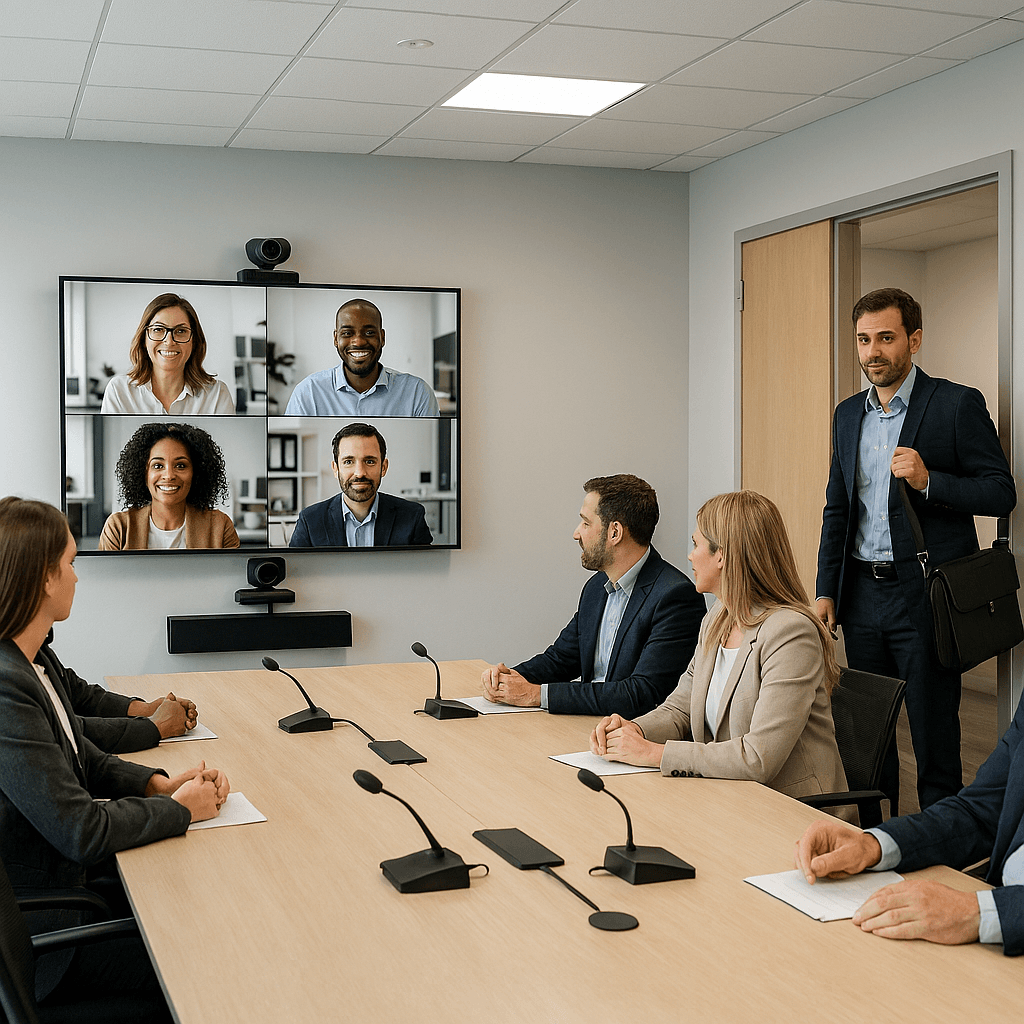
Remember when controlling a conference room meant juggling multiple remotes and hoping the infrared signal would reach the projector? We've come a long way. Modern control systems integrate entire facilities, learn user preferences, and can be managed from anywhere in the world. This evolution reflects changing expectations—users demand simplicity while systems grow more complex. Here's how control technology has evolved and where it's heading.
The Era of Infrared: Simple but Limited
Early AV control centered on infrared remotes—simple, inexpensive, and familiar. Their ease concealed profound limitations: line‑of‑sight constraints, unreliable reflections in glass‑heavy spaces, and fundamentally one‑way control without state awareness. In professional environments, these shortcomings translated into guesswork: is the projector actually on or just receiving the command? Did the volume change or did the command miss?
The lesson from the IR era is durable: familiarity doesn’t equal reliability. As systems moved into larger rooms and mission‑critical contexts, organizations realized that consumer control metaphors don’t scale. Professional AV needed determinism, feedback, and integration beyond a single device.
Touch Panels: The Centralized Control Revolution
Dedicated touch panels introduced centralized, stateful control. Interfaces could be designed around specific workflows instead of device menus, and two‑way communication provided live status—input selection, lamp hours, mic mutes—replacing guesswork with visibility. Because panels were hardwired, they avoided the fragility of consumer tablets: no depleted batteries, no OS pop‑ups, and no wrong‑app confusion when a meeting is starting.
This era established key principles that still matter: centralize complexity, present only what the user needs, and ensure the interface is always ready. Done well, a panel becomes a ritual: one button to start, and the room responds predictably every time.
The Mobile Revolution: BYOD Meets AV
Smartphones and tablets brought familiar interaction models and rapid iteration to AV control. Interfaces could be updated overnight. Personal devices lowered hardware costs and enabled features like secure authentication and context awareness. Yet the realities of production spaces intruded: dead batteries, locked screens, OS updates, and the unpredictability of personal devices introduced friction when timing mattered most.
The practical outcome has been hybrid control: dedicated panels provide reliability and availability, while mobile apps supplement with flexibility for power users and administrators. The combination lets organizations optimize for both immediacy and capability.
Cloud-Based Control: Intelligence Everywhere
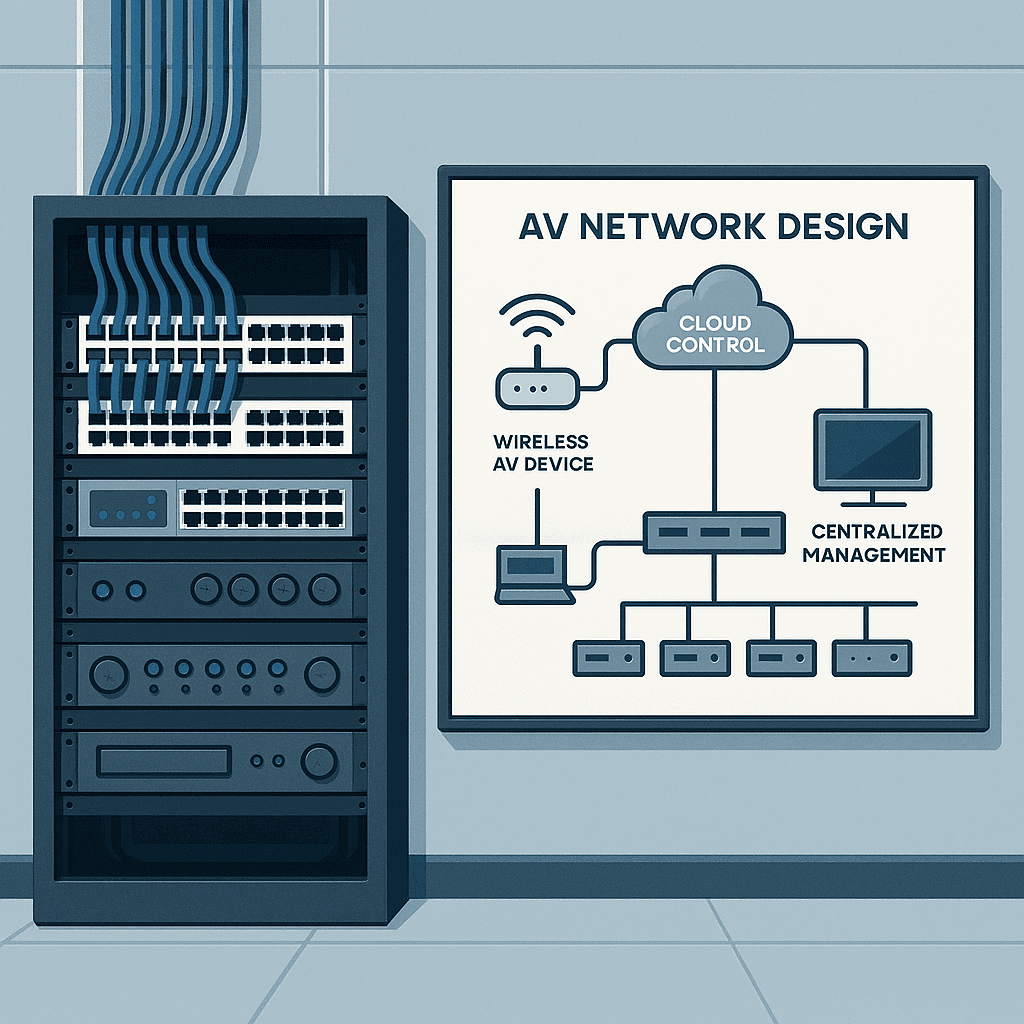
Cloud connectivity shifted control from isolated rooms to managed fleets. Remote configuration, policy enforcement, and software distribution turned day‑two operations into an engineering discipline instead of ticket triage. Analytics surfaced usage patterns and leading indicators of failure—projector lamp hours, DSP fault logs, network jitter—so issues could be addressed before meeting time.
Enterprises benefit most: the effort to manage ten rooms or a thousand becomes a question of standards and automation. The trade‑offs are familiar—connectivity, data governance, and recurring costs—so many organizations adopt hybrid models with local autonomy and cloud orchestration.
Voice Control and AI: The Next Frontier
Natural language interfaces and machine learning are expanding both how users interact and how systems operate themselves. Voice commands lower the activation energy for common tasks—joining the scheduled meeting, selecting the document camera—while AI optimizes framing, levels, and noise profiles in the background. Predictive maintenance moves organizations from reactive support to planned interventions, and occupancy intelligence aligns environmental systems with actual usage.
The design challenge is agency. Automation should assist without surprising. Provide clear state, easy overrides, and privacy guardrails so users gain confidence rather than uncertainty.
Choosing the Right Control Approach
There is no single right answer; there are right trade‑offs. Smaller spaces benefit from simple, deterministic interfaces that start meetings in one touch. Large portfolios benefit from cloud management that standardizes experience and operations. High‑security environments may keep control fully local while still adopting modern UX. Accessibility goals justify multimodal inputs—touch, voice, large‑format controls.
Most successful programs converge on a layered model: dedicated panels for reliability, mobile for flexibility, and cloud for observability and scale.
Conclusion
AV control has evolved from simple remotes to sophisticated, intelligent systems that integrate entire facilities. This evolution reflects a fundamental truth: technology should adapt to users, not the other way around. The best control systems are invisible—users walk into a room, tap "Start Meeting," and everything just works.
Looking forward, control systems will become even more intelligent and proactive. They'll predict needs, optimize automatically, and require minimal user intervention. But the core principle remains: simplify the complex, make technology accessible, and ensure reliability above all else.
Key Takeaways
- •Control systems have evolved from simple IR remotes to cloud-based intelligence.
- •Modern systems integrate entire facilities and learn user preferences.
- •The best control systems are invisible and just work.
- •Choose control solutions based on space size and user needs.
- •Future systems will be more intelligent and proactive.